
Playing freely
And not limiting innovation to what is already best practice

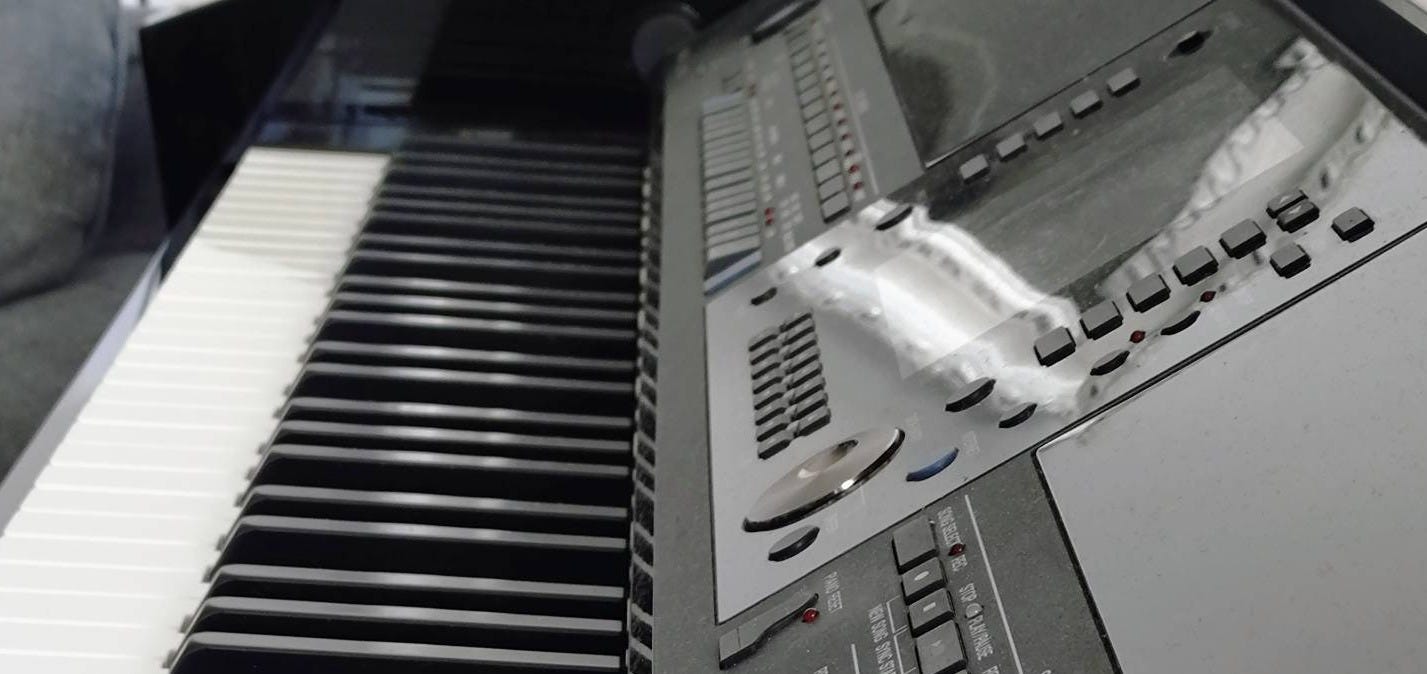
I have a digital piano at home with a lot of features for automatic playing. Apart from completely pre-recorded songs in MIDI-format that you can practice to, it can produce a full accompaniment, in a style you select, with a bunch of percussion and other instruments just based on a chord you take with the left hand. It really lets you as a single player play like a whole band.
I have noticed a few things though, regarding the the modes I have when playing it with these helper features on, or when playing it freely as a normal piano.
Playing with the accompaniments can be real fun and it can sound pretty good with little effort.
But it also ultimately sets a limit of what I can express.
It forces me into a particular style, tempo, temperament, and - most of all - mood, that I can not go beyond.
Playing the piano freely will feel less rewarding at first, without some warm-up, such as half an our of finger exercises the day before I play.
But it lets me express my mood and inner feeling in a completely different way. It allows the instrument to become an extension of my heart and mind as I do control it fully.
It also eventually feels much more rewarding as I see my playing improve dramatically much more over time, when playing it freely, given some deliberate practice.
I feel how I’m growing more capable of expressing myself, how I’m getting more free and capable of innovating with the music, in a way that never happens with the automatic playing.
I have thought about this many times, and I think there are similarities between this experience and the Vibe-coding trend - letting AI models write the code for you, and increasingly also do the thinking and architecting of solutions.
With Vibe-coding you can get a lot of impressive results with little effort.
But you don’t let the code you write become part of your own inner mental models, for which your mind can ponder upon over days to find cleaner, more robust solutions that do things more correctly with less code and less energy spent executing. You don’t develop your mechanical sympathy for neither the code nor the execution of it.
This ultimately puts a cap your ability to innovate. You are capped by the best practices coded into the LLM model you use. You are cutting yourself off from those moments where you finally see how you could reduce your code by 10 times to get a 10 times more efficient, maintainable, understandable and performant solution.
I’m extremely hesitant to cut myself off of the benefits of being able to innovate beyond what is already best practice.